

IEEE Day 2026 takes place on Tuesday, 6 October, bringing engineers, researchers, students and technology professionals together to recognise the role of collaboration and innovation in advancing technology.
What is IEEE Day?
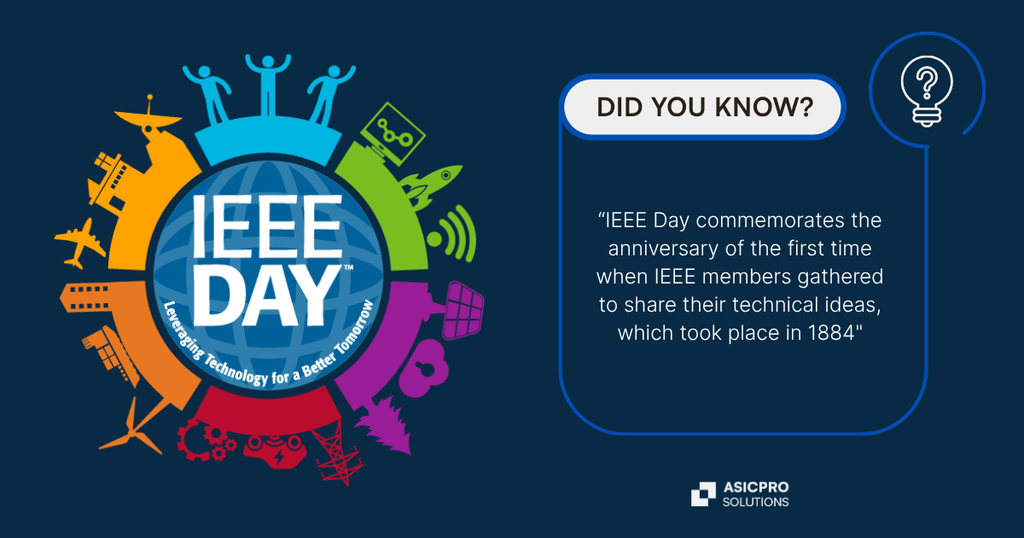
IEEE Day is an annual celebration of the global IEEE community and its history of bringing engineers together to exchange technical ideas.
The day commemorates the first gathering of engineers who came together in 1884 to share technical knowledge. All these years later and still IEEE Day provides an opportunity for members and the wider engineering community to collaborate, learn and recognise the contribution of technology to society.
While the main celebration takes place on the first Tuesday of October, IEEE Day activities take place across communities around the world, with more than 100 events ranging from technical sessions and workshops to networking and educational activities between 4 – 17 October 2026.
IEEE Day 2026 Theme: Leveraging Technology for a Better Tomorrow
The theme for IEEE Day 2026 is “Leveraging Technology for a Better Tomorrow.”
For engineers, this theme goes beyond developing new technology for its own sake. It raises an important question: how can engineering expertise, collaboration and innovation be applied to create technology that is reliable, efficient and capable of addressing increasingly complex requirements?
In semiconductor engineering, these considerations are present throughout the development process.
As chips become more sophisticated, engineering teams must balance performance, power efficiency, reliability, security and verification requirements. The quality of the underlying design and verification process therefore plays an important role in determining how effectively new technologies can move from concept to real-world application.
The Role of IEEE in Semiconductor Engineering
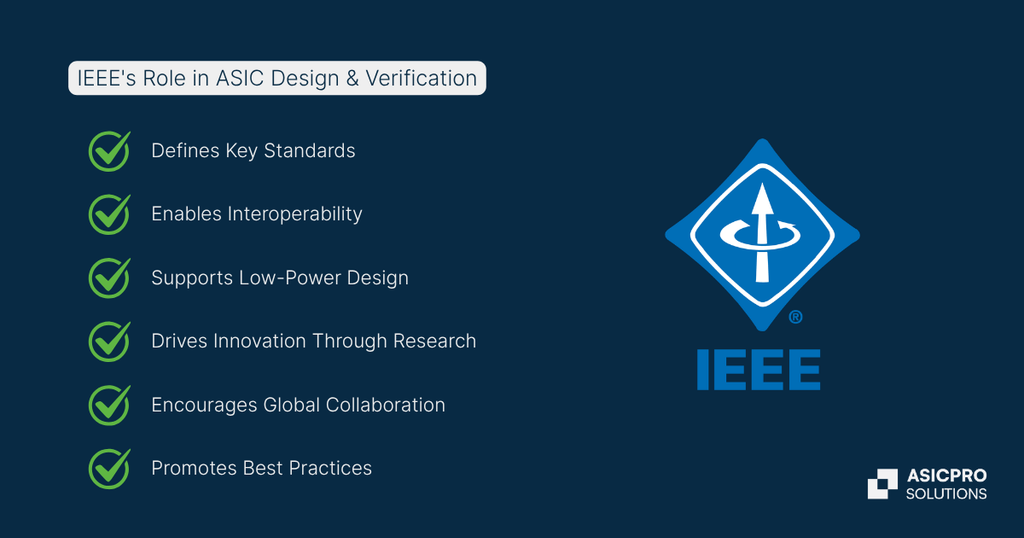
IEEE standards are closely connected with many of the technologies and methodologies used throughout the semiconductor industry.
One example is SystemVerilog, defined by IEEE 1800-2023 as a unified hardware design, specification and verification language. The standard covers hardware modelling as well as verification capabilities including testbenches, assertions, coverage and constrained-random verification.
IEEE also maintains standards relevant to areas such as low-power electronic design. IEEE 1801, for example, defines a method for specifying power intent and supporting the verification and implementation of power-management architectures in electronic systems.
These standards provide a common technical foundation that helps engineers and organisations work across complex design and verification environments.
Celebrating IEEE Day 2026
IEEE Day 2026 is an opportunity to recognise the engineers, researchers and technology professionals contributing to the development of the systems that will shape tomorrow.
From semiconductor design and verification to artificial intelligence, communications and low-power electronics, engineering decisions made today will influence the capabilities and reliability of future technologies.
At AsicPro, we’re proud to work within this wider engineering ecosystem and contribute to the development and verification of advanced semiconductor technologies.
Happy IEEE Day 2026!
Follow AsicPro on LinkedIn for more updates on ASIC design, verification, semiconductor technology and industry developments.